
Services
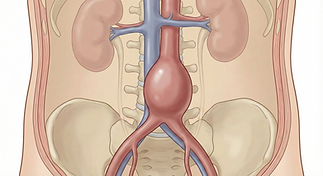
Screening for Abdominal Aortic Aneurysms (AAA)
If you live in Ontario and are between the ages of 65 and 80, a new provincial healthcare initiative might be one of the most important medical appointments you ever make.
The Ontario government has recently launched a structured screening program for Abdominal Aortic Aneurysms (AAA). It’s a silent condition that rarely shows symptoms until it’s too late, but with this new program, it is easily detectable and treatable.
Here is some information about AAAs and information about the screening program.
What is an Abdominal Aortic Aneurysm (AAA)?
The aorta is the main artery that carries oxygen-rich blood from your heart down through your chest and abdomen to the rest of your body.
Sometimes, the walls of this artery can weaken over time. When this happens in the section located in your abdomen (belly), the pressure of blood pumping through it can cause the area to bulge or balloon outwards.
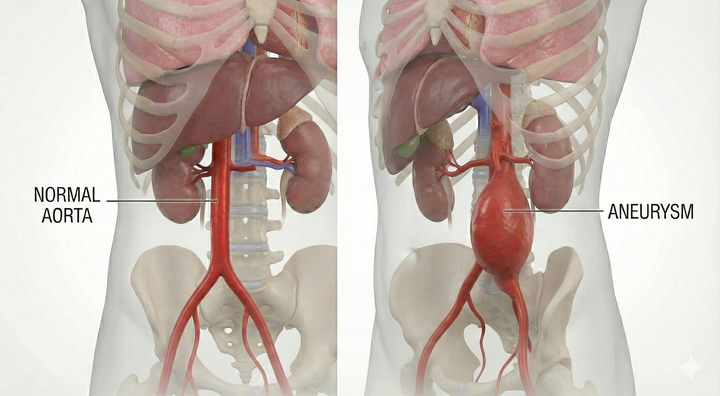
This bulge is called an Abdominal Aortic Aneurysm.
The danger of an AAA is that it usually grows slowly without any symptoms. You likely wouldn't know you had one. However, if the aneurysm grows too large, it can burst (rupture), causing massive internal bleeding. A ruptured AAA is a catastrophic medical emergency and is frequently fatal.
The key to survival is catching it before it ruptures.
The Good News: Ontario’s New Screening Program
Until recently, screening for AAA in Ontario was often ad-hoc. The new provincial program changes that by taking a proactive, structured approach to identify people at risk earlier.
The goal is simple: detect aneurysms when they are small, monitor them, and treat them electively before they become a life-threatening emergency.
Who Is Eligible for Screening?
The new program focuses on both men and women aged 65 to 80, as the risk of developing an AAA increases significantly with age.
1. Men aged 65 to 80 are significantly more likely to develop an AAA than women. Therefore, all men in this age bracket are now recommended for a one-time screening ultrasound.
2. Women were mostly excluded from major AAA screening studies, but recent Ontario research shows screening is cost-effective for women. Therefore, screening is also recommended for women aged 65-80, especially those who smoke, have a family history of AAA, or a history of cardiovascular disease
What Does the Test Involve?
Many people get nervous about medical tests, but AAA screening is incredibly simple, quick, and painless.
The screening is done using a standard ultrasound—the exact same technology used to look at babies during pregnancy.
-
It is non-invasive: No needles, incisions, or dyes are used.
-
It is painless: You simply lie down while a technician moves a handheld wand over your abdomen.
-
It is quick: The appointment usually takes less than 20 minutes.
You can have the scan done at hospitals or Integrated Community Health Services Centres (ICHSCs) across the province that perform diagnostic ultrasounds.
What Happens Next?
If your scan is clear, you generally won’t need another one.
If an aneurysm is found, your doctor will guide management afterwards.
Take Action Today
This new program is a vital step in preventative health for older adults in Ontario.
This blog is for general information only and isn’t intended to be medical advice. Please consult a healthcare provider for any questions or concerns about your own health.